
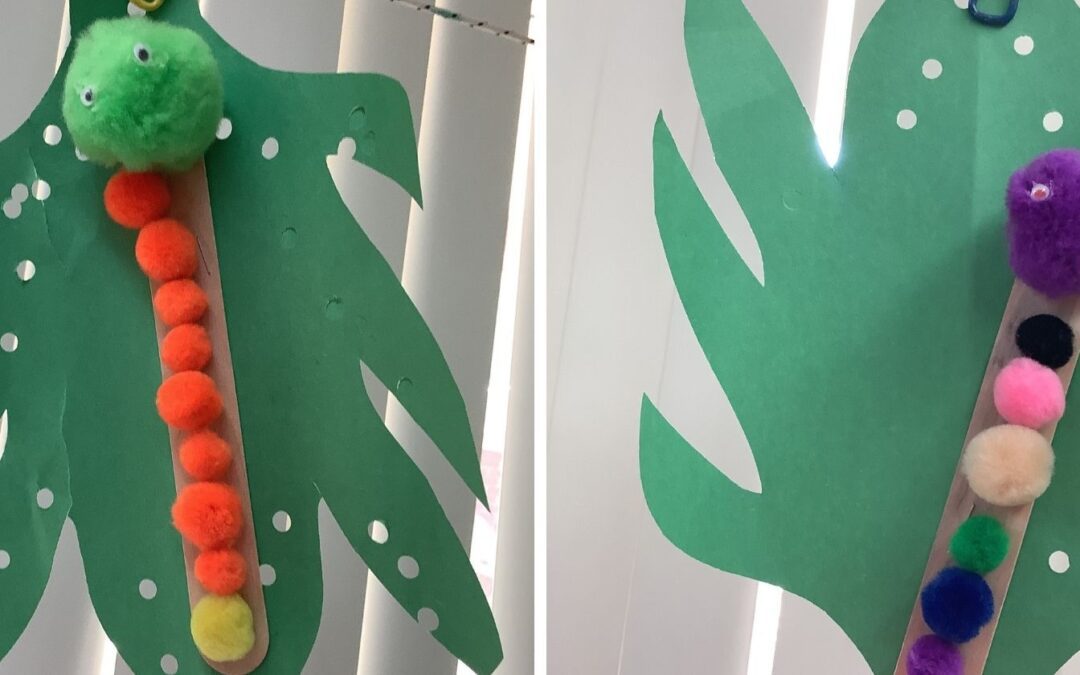
The Sprouts welcomed springtime with a creative craft inspired by the real caterpillars in their classroom and the beloved spring season. Using simple materials, the children made their very own colorful caterpillars while also learning about how caterpillars grow and change. This project combined art, imagination, and early science exploration.
Learning Focus
- Understanding the life cycle of a caterpillar
- Strengthening fine motor coordination through gluing and hole punching
- Cultivating curiosity and love for science and nature
For the Sprouts, nature-based projects encourage both observation and creative play. Activities like this one make abstract scientific concepts, such as growth and transformation, concrete and meaningful by allowing children to create their own versions of what they’re learning.
Project Details
Time Required: 2 days
Materials Needed:
Popsicle sticks
Colorful pompoms
Googly eyes
Glue
Construction paper (green leaves)
Hole punchers
Step-by-Step Instructions:
- Provide each child with a popsicle stick and a variety of colorful pompoms.
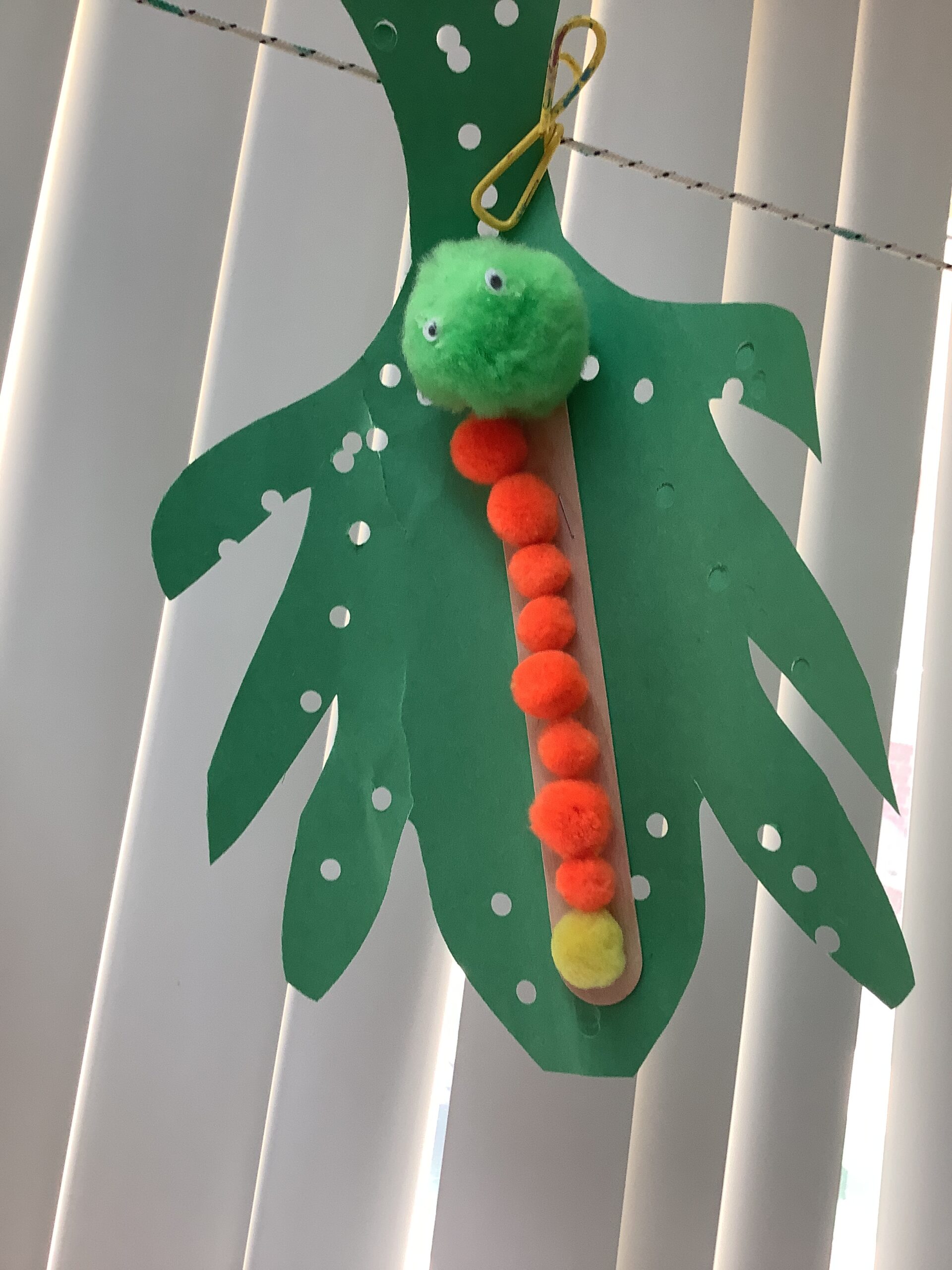
- Children glue pompoms along the stick to form their caterpillar body.
- Each child chooses a pair of googly eyes to personalize their caterpillar.
- Allow caterpillars to dry fully.
- Cut out green leaf shapes from construction paper.
- Give children hole punchers so they can “feed” their caterpillars by punching holes into the leaves.
Student Engagement
The children were highly enthusiastic about this project. They enjoyed choosing colors for their caterpillars and took pride in being able to personalize them with different eyes. Punching holes into the paper leaves was especially exciting, as it made their caterpillars seem real and alive. The project sparked conversation about how caterpillars eat, grow, and eventually become butterflies.
Teacher Reflection
This craft was both fun and educational, providing hands-on ways to connect art with science. The children easily engaged in the activity, and it required minimal prep while delivering meaningful learning moments. Going forward, pairing this activity with a storybook about caterpillars or butterflies could extend the learning even further.
